Wednesday, January 30, 2013

A Gift from the Non-Jewish Spouse: Reflections on the Part of a PTJL Instructor


What does it mean to be a Jew, especially in our complex world? Here is one Parenting Through a Jewish Lens instructor’s intriguing and perhaps unexpected reflection on this issue, inspired by students he’s met with while teaching PTJL. Given that this is an important and exciting debate, please read Natan Margalit’s blog post and let us know what you think.

created at: 2013-01-30

I’m always amazed by the things that I learn in my PTJL classes. This year, I am privileged to teach a number of intermarried couples. Like all couples, they bring their personalities and backgrounds, parenting styles, and pet peeves to our PTJL discussions. The added dimension of religious and often cultural diversity makes our class sessions that much more interesting. One thing that I’ve noticed pretty consistently: the non-Jewish partners are usually the ones who are most interested in learning about Jewish ideas of God and prayer.

Typically, the Jewish partner has been brought up in a fairly secular home. Their taken-for-granted Jewishness is often a vital part of their identity – many celebrate holidays, support Israel and Jewish causes, enjoy Jewish food, and understand Jewish humor. But they were not necessarily brought up with a lot of prayer or God talk. In fact, God talk often feels “un-Jewish” to them.

This often confounds and confuses their non-Jewish (and usually Christian) spouses, who ask, “If being Jewish is so important, why didn’t you learn anything about Judaism?” This question leads to discussions about Jewish peoplehood, and how Judaism is a people and a religion mixed together.

But it also brings up the fact that very often the Christian (or formerly Christian) partner is the one who is taking the lead in teaching the kids about God, prayer, the soul, afterlife, etc. – all the things that secular Jews are uncomfortable talking about! The non-Jewish spouse is also quite eager and anxious to learn the Jewish way to approach such subjects. They know they are important, and want to teach their Jewish kids the proper Jewish way. So, I’ve learned in these classes that we – the Jewish community -- may be receiving a huge gift from these non-Jewish spouses: they are helping to re-introduce us to God.  


Monday, January 14, 2013

An Understatement


Michelle Wheeler participated in Parenting Through a Jewish Lens at Temple Beth Shalom in Needham where the overwhelming interest lead to two full classes. If you missed the fall sign up there are two spring classes to take advantage of in Newton and Sharon.

To say that walking into the Parenting Through a Jewish Lens classroom was overwhelming is an understatement. I have not taken a class in years and I had no idea what to expect. I chose to register for the program out of a desire to bring more Jewish traditions into my home and to further the learning experience that my two young children are having at their JCC preschool. Taking Parenting Through a Jewish Lens was the best decision I have made in a long time.

Right away, our instructor, Sabrina Burger, made us feel comfortable and helped us get to know one another. Our class was so friendly and inviting. Each week we explored a different topic and were encouraged to share our opinions - rich conversations ensued. Sabrina was very open to questions and if she didn’t know the answer, she would look into the topic and bring the information and additional resources to the next class.

One ritual I brought home from the class is the reciting of the Shema with my children at bedtime. It is a new part of our routine and we use the colorful card – beautifully illustrated and in Hebrew, English and transliteration that we parents received the first day of class.

I wish this program had a part two that I could attend before my children reach their teenage years (Parenting Your Teen Through a Jewish Lens looks like another wonderful offering.) I highly recommend taking this class for the camaraderie, the conversations, and the guidance. 


Images created by Michael Horen 

Monday, December 17, 2012

Four Pieces of Advice on this Difficult Monday Morning

Parenting Through a Jewish Lens instructor Margie Bogdanow shares her advice in the aftermath of the Newtown, CT tragedy.


The grief of the past few days has been unimaginable.  Many of us are torn between watching and listening to the 24/7 onslaught of media coverage and the desire to turn off everything imaginable and run away into a world where Friday’s events could never ever take place. The faces of a grieving community, and most of all the missing faces haunt us.  In this internet savvy world we live in, there has been a flurry of advice to parents. My way of coping is to add my voice to the discussion.  My thoughts are simple and are focused on today, not on next week.  Next week we can talk about next week.


1) Be present.  That means that to the extent possible spend time with your kids this week.  And more importantly, that means that when you ARE with your children, be with them.  Play with them, talk with them, and create with them.  When you are spending time with them, let the phone go unanswered and let your email go unread for a few minutes.

2) Listen to your children.  And then listen some more.  Listen and then respond calmly and simply.  The exact words you use are less important than the fact that you are there to listen to what they are saying, thinking and feeling.   A “yes, it is scary” can be one of the most calming responses to a child.  No, you can’t promise them that you will keep them safe.  But you can be there when they express fear or sadness or have questions.

3) Turn off the TV and radio when you are with them.  They don’t need to keep hearing about it.  It will not help them.

4) Lastly, but not least – Find ways to process this for yourself.  This new reality will now have to be integrated into your life as a parent. You need to express it and process it so that you do not have to process it with your children.  If you are a writer, write something.  If you are a painter, paint something.  If you are a singer, sing something. If you are a doer, do something.  If you are a talker, call a friend, or go out with friends and talk about it.  Or find a coach, a therapist or a parenting consultant to help you integrate this into your life.  Getting help for yourself so that you can help your children is a sign of strength. As we are told every time we take a plane ride.  “Put the oxygen mask on your face before you assist your children”

It is true on airplanes, it is true during everyday life, and it is particularly true in times of crisis.

Tuesday, November 27, 2012

The First Day of Parenting Through A Jewish Lens

Anyone who jogs or swims knows that the hardest part is usually that first step, that first plunge into the pool.   As an adult who recently signed up for a Parenting Through a Jewish Lens (PTJL) class, I felt that same anxiety about beginning something new and unknown.  But in this case it was coupled with the unpleasant feeling of being a kid again, back in school, not knowing things - a tough feeling when you're in your early thirties.  But I was surprised and relieved about how the first day went.

Our class met at a temple and the teacher was warm and welcoming to the fifteen of us around the table. The teacher had us introduce ourselves and our families, and answer a question to break the ice: what was our most favorite and least favorite part of the day?  Some parents loved ending the day snuggling with their kids or reading to them in bed, some fathers in particular said they loved picking their kids up from preschool.  But for least favorite, there were two biggies: making lunches, and getting kids to brush their teeth before bed.  This last one got the whole group talking, and laughing!  We all ended up sharing tips about how to keep kids on task long enough for them to get any benefit (the best idea I came away with was to have the kids dance to music they liked while brushing--but the music has to last exactly as long they need to brush!).


The composition of the group was also a pleasant surprise.  It was more diverse than I anticipated; it included an African-American woman married to a Jewish guy, an Indian-American man married to a Jewish woman, and a lesbian Jewish mom.  As people talked it became clear that we had much in common: we were looking to get better at parenting, and to learn things about Judaism that could help us raise more thoughtful kids.  One of the participants, whose partner was not Jewish, said she wanted to learn more about Judaism in order to discover what was moving and deep about her own tradition and then pass that on to her daughter.  She worried that her daughter would know otherwise only her partner's culture.  It felt to me that she also wanted to make sure that her daughter really knew her, really knew who her mother was.

It was inspiring, and educational, warm and friendly.  And best of all, it was much more fun than I had thought.  If you're raising a Jewish child, you should put this class on your “to do” list.   

Parenting Through a Jewish Lens classes begin in the fall and run for 10 weeks, with free on-site babysitting for morning classes. Outstanding instructors are adept at facilitating meaningful discussions and provide information and tools while building community. Learn more at www.hebrewcollege.edu/parenting

Thursday, November 15, 2012

On Generosity


Parenting Through a Jewish Lens instructor Sabrina Burger shares her insights – and a challenge to you – regarding generosity. Sabrina lives in Sharon and is teaching this year’s Needham class at Temple Beth Shalom. Her thoughts are especially pertinent in the wake of Hurricane Sandy and the approaching Thanksgiving holiday.


Our tradition teaches that acts of loving-kindness are fundamental to sustaining the world. While each of us have an obligation to perform these acts of loving-kindness, in order to do so we need to open our hearts. Sometimes being in close contact with those in need can arouse a feeling of empathy and care; seeing the recent images of people suffering after a natural disaster prompts many to give assistance. But the question that interests me is not what opens my heart to an occasion, but how can I cultivate habits of mind in myself and in my children that will encourage a generous response? 

Rabbi Dessler, one of the leaders of the Mussar movement of the 20th century, asked an insightful question: Do you give to the ones you love, or do you love the ones to whom you give? 

Our sages teach us an important and surprising principle in Ethics of the Fathers (3:15): “All is in accordance to the abundance of the deed.” In other words, the sages believe that it is better to give $100 bills to 100 people than to give one single $100 bill to a single person. Why? 

Because, if the action of giving arouses our hearts, then the action of giving 100 times is spiritually transformative. Here, our external actions can bring about internal change. 

Since we’re discussing action, I might suggest that you take on a challenge this week: perform two actions of loving-kindness, two selfless acts, every day. You don’t have to be generous only with your money; it can be with your time, your energy or your possessions. See what happens.

Thursday, November 8, 2012

Striking a Balance

Liz and Dan are currently participating in Parenting Through a Jewish Lens at the JCC in Newton. They are finding the class gives them time to contemplate their hopes for their child and the values they want to embody in their household.

It has always been important to us to build our lives--individually, as a couple, and as a family—in such a way that we incorporate the richness of our Jewish heritage, and the community of both our religious and secular worlds.

Now that we are parents, this balance seems increasingly more important, and increasingly more difficult.

Our son is young, but he is becoming old enough now to understand what is going on around him—he is able to recognize familiar songs, familiar people and familiar routines.  Our hope is to teach him about Judaism and establish traditions with and for him that will allow him the fluency necessary to ultimately create his own meaning for himself about what role Judaism plays in his life. We want him to grow up with a strong and proud Jewish identity, and to honor his history and the history of his people. We want him to feel a sense of responsibility to the world as a Jew—and also engage his secular community, family, and world without judgment or arrogance, and with humility.  We want him to engage his Jewish world with curiosity, adventure, and strength—in fact, that’s what we want for him throughout all parts of his life, religious or not.

We just celebrated Halloween—a decision our household is admittedly somewhat divided on (as are Jewish leaders). Aside from being the cutest turtle around, our son had an opportunity to join in our neighborhood Halloween parade, hand out candy to his neighbors, and “oohh” and “ahhh” at the big kids in their impressive costumes.  Is it Jewish? No.  Is it difficult to explain? Sure.  But the truth is that our son is growing up in a world full of opportunities and choices, and we hope to guide him through a set of experiences that will enable him to be a thoughtful member of his multiple communities. We want him to be happy, we want him to be good to people, and we want him to love his Judaism.

Thursday, October 18, 2012

Preparing for Parenting

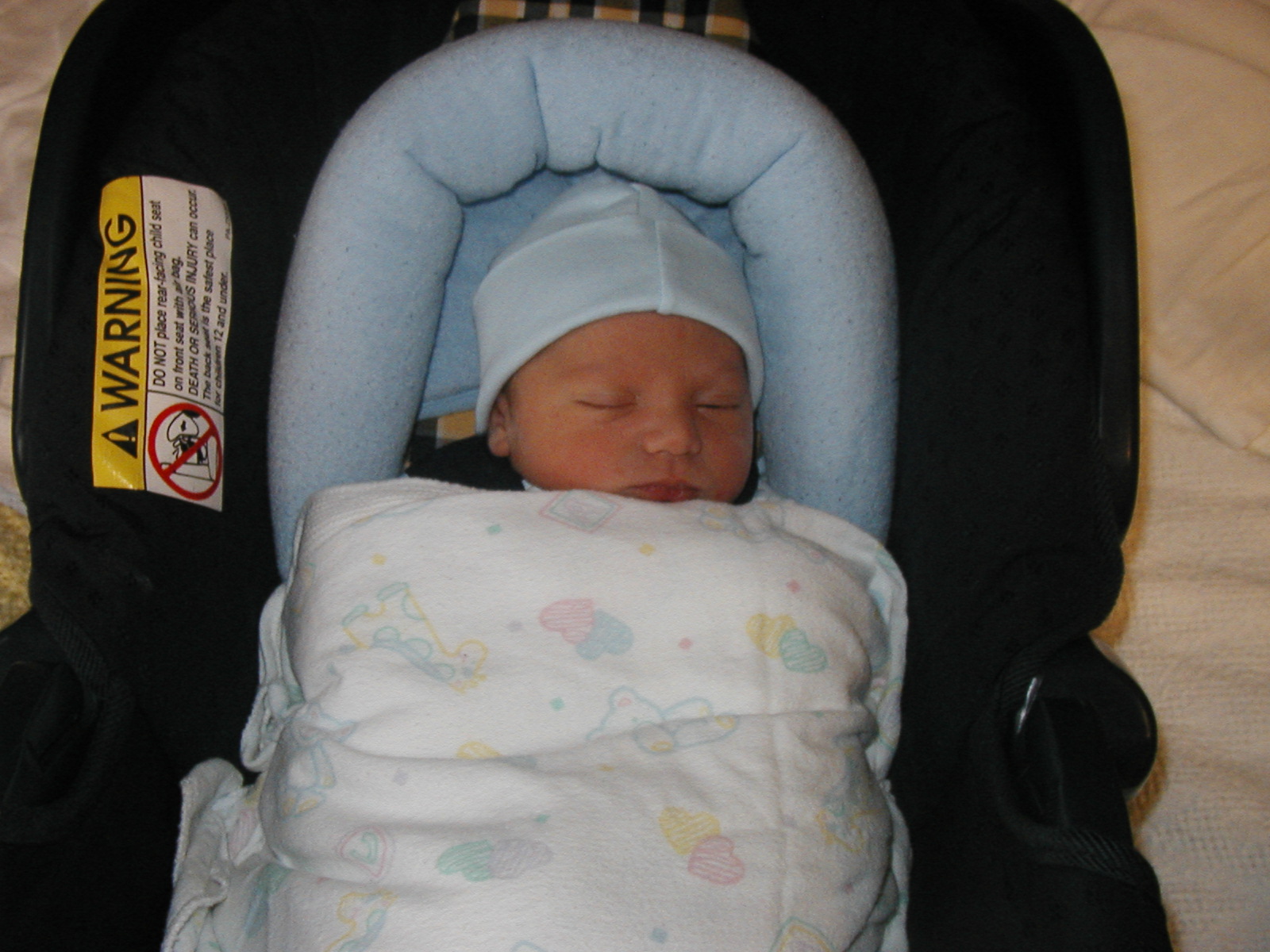
 The first snowflakes of the much anticipated blizzard started to fall, just as we were getting ready to take our newborn home from the hospital.  We carefully strapped her into the brand new way-too-expensive infant car seat (which had been installed previously by a volunteer in our local police department) and I climbed into the backseat.  Slowly and cautiously, my husband began to drive.

“I’m not prepared for this,” my usually confident husband said in a shaky voice.

“Relax,” I assured him, “it’s just a few flakes; we’ll be at home way before there’s any real snow.”

“No,” he said, “I don’t mean driving in the snow; I mean fatherhood!  I’m not prepared for this!”

Does any parent ever feel sufficiently prepared for parenthood?  How could we have been ready for the debilitating effects of sleep deprivation or have anticipated the depths of love we feel?  Could we even have imagined that with everything we want to bring to our children, they would, in turn, be bringing to us reminders of our own joy, wonder, optimism?

I could never have envisioned all that parenthood would teach me about my strengths and shortcomings, about my marriage, and about my priorities. Parenthood teaches us–expands us, stretches us, strengthens us–in ways we can neither anticipate nor prepare for. What have been the unexpected lessons that caring for your children has taught you?


 Rabbi Julie Zupan teaches Parenting Through a Jewish Lens at the JCC in Newton.  She currently serves as the Jewish Family Educator for the Early Learning Centers of the Jewish Community Center of Greater Boston (JCCGB).