Wednesday, March 20, 2013

Ever Been to a Truly Meaningful Seder?

Parenting Through a Jewish Lens Alumni Advisory Group Chair Jessica Boatright reflects on making Passover Seders significant and shares a special family tradition. 

If you’ve been following this blog, you know that we recently had a great event to help alumni and friends of Parenting Through a Jewish Lens prepare for Passover. The afternoon included two short (and inspiring!) classes for parents – one on making the seder meaningful for our kids, led by Rabbi Julie Zupan, and the other on making the seder meaningful for adults, led by Rabbi Natan Margalit.


I have been reflecting on the session with Natan, and what it meant to me as a parent and individual. Natan began our session with a question that really struck me – he asked the group if they had ever been to a seder that was truly meaningful to them, as adults. Less than half the room raised their hands. His assertion, which received a lot of knowing looks, was that as parents we spend a lot of time thinking about how to make holidays and traditions meaningful and fun for our kids, and not very much time thinking about how to make them meaningful for ourselves. Moreover, as we learned as PTJL participants, helping our kids find meaning and connection is dependent not just on how we teach but on how we are – on how our kids perceive our own connection to Judaism. Natan’s Passover class was about nurturing this connection.

Luckily for me, I was able to raise my hand to Natan’s question, as I have been to not just one, but to many seders that have been meaningful to me as an adult. One reason for this is a tradition that we started with my mother’s family of having two very different seders – a traditional seder on the first night of Passover, and a more modern interpretation of a seder on the second night. Each year someone would find a new Hagaddah to use on the second night, usually aligned with a political theme (feminism, the labor movement, etc) or an expression of the seder (the puppet-based “We Tell It To Our Children” is a family favorite). Doing these two seders allowed us to deepen our connection to the holiday – reminding us that the story is both ancient and contemporary, that the seder is to be experienced both collectively and individually, and that Passover reminds us not just of our connections to the Jewish people but of our connections to humanity as well.


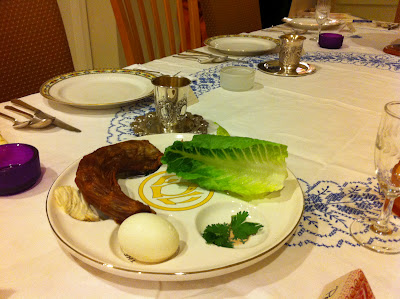
As the busy mother of two young children, however, it is easy to fall into the trap of forgetting the grown-ups, and myself, in the seders. While I might decorate the table with plastic figurines of the plagues for the kids to play with, I am hard-pressed to make time to find a new Hagaddah every year. But Natan’s class and my memories have me thinking – perhaps we don’t need a whole new seder to get us thinking. Instead, we can look for moments, maybe even just one, that we can add to help us find new meaning. It doesn’t even need to take much time. Put an orange (or a tomato) on your seder plate for the first time. When you raise each cup of wine, take a moment to tie it to a modern social justice issue. There are plenty of resources online, in print, and elsewhere to get you started in picking something. Below are a few ideas from Natan and me:

Friday, March 15, 2013

Passover Recipes inspired by Matzah Matters


This past Sunday, the Parenting Through a Jewish Lens Alumni Advisory Group put on a fabulous event to help families prepare for Passover. “Matzah Matters” drew 60 people who enjoyed learning, schmoozing, eating and crafting.

The planning group got creative with the menu: everything served corresponded to foods you typically find at a Seder; mini quiches were a nod to the eggs we eat and have on the Seder plate, sliced apples alongside trail mix was meant to mimic charoset, and fresh vegetables with dips were a nod to parsley and salt water. Here we share some recipes to help bring these dishes to your Passover table. Next week watch out for a post with resources engaging adults and children in the Seder that were shared at the event.


Cottage Cheese Mini Quiches
This recipe comes from Alumni Advisory group member Hilda Lief. It is super easy to make so kids can help!

1 lb. cottage cheese, small curds
3/4 cup Bisquick
1/4 cup margarine
1 onion, chopped
3 Tbsp. sour cream (or plain yogurt)
1 Tbsp. sugar
3 eggs

Mix all ingredients. Bake at 350 degrees for 30 minutes in greased mini-muffin tins. Cool in pans 15 or more minutes before removing. Yield: 48


Roasted Potatoes with Lemon, Olives and Dill
Recipe by Associate Director of Adult Learning at Hebrew College, Elisha Gechter – check out her blog for more.


2 lb bag of red bliss potatoes
2 lemons
1 jar of cured pitted black olives
1 Tbsp. of paprika
1/4 cup of chopped fresh dill
2 Tbsp. olive oil
Salt and pepper

Preheat the oven to 350 degrees.

Slice the potatoes in half and scatter on a metal baking sheet. Finely slice the lemons and olives and lay on top of the potatoes. Sprinkle with the paprika and dill and the salt and pepper. Drizzle with olive oil and then bake for 35 minutes until potatoes are golden and crispy.

Alumni Advisory Group member Phoebe Peabody shares her recipe for Matzo Brei as well as links to two new recipes she plans to attempt this year:


Matzo Brei
Adapted from Martha Stewart, a great "french toast" style treat during Passover.

6 matzahs (8 inch squares)
6 eggs
1/2 tsp. cinnamon
1 Tbsp. sugar (we like it sweet, so decrease to taste)
Salt to taste
2 Tbsp. butter

1. Break each matzah square into about 8 pieces, place in large bowl. Add enough boiling water to cover, cover bowl with plastic wrap, and soak for about 5-8 minutes. Squeeze well with hands to remove excess water.

2. Heat oven to 350 degrees. In a medium bowl, beat eggs, cinnamon, sugar and salt. Add softened matzah and mix.

3. Heat butter in 12 inch, oven-safe skillet over medium heat, swirl to coat. Add matzah mixture and press gently. Cook until brown on bottom and butter bubbles and comes up on sides. Place pan in heated oven and finish cooking, 15-18 minutes, or until brown.

4. Serve with syrup, or fruit puree.

Tip: You can cool leftovers and cut into wedges and warm in toaster oven. We make a big batch to be sure we have happy bellies all week!

For more Passover Recipes visit JewishBoston.com’s collection

Happy Eating!


Monday, March 11, 2013

Yes, Matzah Matters!


There were over 60 people at our "Matzah Matters" event yesterday at Hebrew College for local families and Parenting Through a Jewish Lens alumni.

Check back later this week for Passover resources and recipes!

Kids enjoy creating Passover crafts for the Seder table

More crafting and playing

Parents learn with Rabbi Julie Zupan, discussing how they can make the Seder more engaging for kids
Parents also learned with Rabbi Natan Margalit about involving adults as questioners and participants in the Seder

The food served was inspired by Seder cuisine

Parents peruse resources to help make their Seders come alive

Wednesday, February 27, 2013

Q&A with a Parenting Through a Jewish Lens Alum

Native New Englanders David and Alison Lobron live in West Newton with their two children and are members of Congregation Dorshei Tzedek. They participated in Parenting Through a Jewish Lens this past fall at their synagogue and David answered some questions for us about his experience. 

What prompted you to sign up for the course?
My wife and I took this course because we wanted to try Jewish learning together, and we were excited to do it with members of our community.  We had taken an earlier Parenting Through a Jewish Lens/Ikkarim class in a different synagogue, and while that was enjoyable, we found that we got more out of it by taking it in our own community.


How did you manage the time commitment?
Since we took an evening class, free babysitting wasn't offered. We hired a babysitter for Sunday nights so we'd both be able to go.  This worked out very well - we had a lot of conversations about the class together that would not have been possible if only one of us had gone.


What makes this a “Jewish” parenting course?
The study materials, plus the fact that we were taking it with members of our Jewish community.  I found it very stimulating to talk about parenting in the context of Judaism, and to see how other people work with the challenges that we all face.


Can you share one or two insights from the course that have stayed with you?
The sessions on Israel and Jewish chosen-ness were quite interesting, because people had very different points of view.  I think the Israel session was my favorite, even though we had some disagreements, because it was clearly on many people's minds.  Our class really spanned the political spectrum.


What did the instructor say or do to create a safe and stimulating learning environment?
I like that the instructor challenged us a bit.  Our congregation is a very liberal Reconstructionist one, and I found it refreshing to read some more conservative texts, e.g., those from Joseph Soloveitchik or Abraham Joshua Heschel.  I don't think our instructor was out to change minds, but I think it helped people see alternative approaches to some topics.


How might Jewish wisdom inform choices you make as a parent?
We've gained a tremendous amount just by being part of a community.  I feel much more resilient and supported than I would feel if we did not have community support.


We invite you join us on Sunday March 10th for Matzah Matters - a free event open to the entire community that includes learning and babysitting/kids holiday craft projects.

Thursday, February 14, 2013

To Learn and to Teach


Rabbi Sharon Clevenger, a recent addition to our Parenting Through a Jewish Lens faculty, is the middle-school rabbi at the Rashi School in Dedham and the mother of two young daughters.

Today in my Parenting Through a Jewish Lens class, I learned something so elegant and inspiring that I wish I had thought of! I can’t wait to try it out in my own life.  I pretty much come home to my husband after every class and say this very same thing. Which is exactly what the framers of this course want - they hope that the small and large “aha moments” inspired by exchanges among teachers and learners will lead to lives more meaningfully lived.  I love and look forward to what I will learn each Sunday.  And I am the instructor.

There is a prayer in the morning service called Ahava Raba.  It thanks God for showing divine love for us (the Jewish people) by giving us the gift of Torah.  It asks God to have mercy on us by giving us what we need to: “understand and discern, to heed, to learn and teach and to fulfill all that is in God’s Torah with love.”  As a Jewish educator, I deeply appreciate the fact that “learn” comes before “teach.”  I walk into my classroom each Sunday, ready to guide my phenomenal students through the inspiring and challenging texts in our binders.  Yet I also enter knowing that I will leave that room knowing far more than I knew at the start of class.  I am there to learn and to teach.


Most of the participants in the class are relatively new to Jewish learning and a few are non-Jewish spouses.  Therefore, each person brings wisdom and knowledge from his or her life.  A typical class session might include students making references to renowned secular philosophers, American business law or Hindu religious and cultural traditions, not to mention the daily inspirations (and grinds) of parenting.  This would be a great conversation on its own, but what amazes me is the way that it all ties together with the texts in the binder and helps frame a “Jewish lens.”  This class is definitely providing transformative Jewish learning for all of the learners, including me.

Wednesday, January 30, 2013

A Gift from the Non-Jewish Spouse: Reflections on the Part of a PTJL Instructor


What does it mean to be a Jew, especially in our complex world? Here is one Parenting Through a Jewish Lens instructor’s intriguing and perhaps unexpected reflection on this issue, inspired by students he’s met with while teaching PTJL. Given that this is an important and exciting debate, please read Natan Margalit’s blog post and let us know what you think.

created at: 2013-01-30

I’m always amazed by the things that I learn in my PTJL classes. This year, I am privileged to teach a number of intermarried couples. Like all couples, they bring their personalities and backgrounds, parenting styles, and pet peeves to our PTJL discussions. The added dimension of religious and often cultural diversity makes our class sessions that much more interesting. One thing that I’ve noticed pretty consistently: the non-Jewish partners are usually the ones who are most interested in learning about Jewish ideas of God and prayer.

Typically, the Jewish partner has been brought up in a fairly secular home. Their taken-for-granted Jewishness is often a vital part of their identity – many celebrate holidays, support Israel and Jewish causes, enjoy Jewish food, and understand Jewish humor. But they were not necessarily brought up with a lot of prayer or God talk. In fact, God talk often feels “un-Jewish” to them.

This often confounds and confuses their non-Jewish (and usually Christian) spouses, who ask, “If being Jewish is so important, why didn’t you learn anything about Judaism?” This question leads to discussions about Jewish peoplehood, and how Judaism is a people and a religion mixed together.

But it also brings up the fact that very often the Christian (or formerly Christian) partner is the one who is taking the lead in teaching the kids about God, prayer, the soul, afterlife, etc. – all the things that secular Jews are uncomfortable talking about! The non-Jewish spouse is also quite eager and anxious to learn the Jewish way to approach such subjects. They know they are important, and want to teach their Jewish kids the proper Jewish way. So, I’ve learned in these classes that we – the Jewish community -- may be receiving a huge gift from these non-Jewish spouses: they are helping to re-introduce us to God.  


Monday, January 14, 2013

An Understatement


Michelle Wheeler participated in Parenting Through a Jewish Lens at Temple Beth Shalom in Needham where the overwhelming interest lead to two full classes. If you missed the fall sign up there are two spring classes to take advantage of in Newton and Sharon.

To say that walking into the Parenting Through a Jewish Lens classroom was overwhelming is an understatement. I have not taken a class in years and I had no idea what to expect. I chose to register for the program out of a desire to bring more Jewish traditions into my home and to further the learning experience that my two young children are having at their JCC preschool. Taking Parenting Through a Jewish Lens was the best decision I have made in a long time.

Right away, our instructor, Sabrina Burger, made us feel comfortable and helped us get to know one another. Our class was so friendly and inviting. Each week we explored a different topic and were encouraged to share our opinions - rich conversations ensued. Sabrina was very open to questions and if she didn’t know the answer, she would look into the topic and bring the information and additional resources to the next class.

One ritual I brought home from the class is the reciting of the Shema with my children at bedtime. It is a new part of our routine and we use the colorful card – beautifully illustrated and in Hebrew, English and transliteration that we parents received the first day of class.

I wish this program had a part two that I could attend before my children reach their teenage years (Parenting Your Teen Through a Jewish Lens looks like another wonderful offering.) I highly recommend taking this class for the camaraderie, the conversations, and the guidance. 


Images created by Michael Horen